LG OLED C6 and G6: what they ship with and what can come off
The 2026 OLED sets on webOS 26. No ADB here either. The C6 moves up a processor and loses a USB port, and this year LG publishes no nits at all.
· 8 min read · By television

152 reading right now
What ADB is, what is safe to remove, and what to do when something goes wrong.
The 2026 OLED sets on webOS 26. No ADB here either. The C6 moves up a processor and loses a USB port, and this year LG publishes no nits at all.
· 8 min read · By television
The Balkan Tesla does not build cars: it is a brand of the Comtrade group, of Belgrade. Vivax belongs to M SAN Grupa, of Croatia. Neither has a single platform of its own.
· 7 min read · By television
Forty-one fields out of forty-three, identical. The only thing that changes between two TCL televisions is the name box, and the price on the shelf.
· 7 min read · By television
One TV whose page title says Fire TV and Android TV at once, another with no EU energy record at all, and eight years of updates TCL never mentions.
· 8 min read · By television
Two names for a set that matches field by field, and almost the only memory figure TCL publishes in its catalogue: 3 GB. The rest is what it does not say.
· 9 min read · By television
The same television changes panel, watts and even energy class depending on which country's official spec sheet you read. And its 144 Hz is 120 in the regulated one.
· 8 min read · By television
The set most people buy for reasons that are not technical, read against its regulated fiche: one fast HDMI out of four, 40W and class G.
· 8 min read · By television
Philips' cheap LED range is six near identical names. Five run a closed system and one runs Google TV, and the box does not say which is which.
· 8 min read · Not Android
The new range and the entry range. Fire TV on top, with a package list and ADB. TiVo below, which is not Android. And five systems in the same shop window.
· 8 min read · By television
The floor of the Panasonic range. A Mini LED on an in-house system, an Android TV with the Play Store, and two sets whose app store is run by a company in Kiel that no longer goes by that name.
· 8 min read · Not Android
Three separate websites, one legal notice: the same Zirndorf company, the same commercial register number and the same four directors.
· 8 min read · By television
A 4,000-euro stellar runs the same VIDAA as a Hisense, and inside a 26,100-euro Beovision there is an LG screen running webOS. The regulated form says so.
· 8 min read · Not Android
The top of the QNED range, 2025 and 2026. No ADB here either. And the most expensive set is the one with the fewest HDMI ports.
· 8 min read · By television
The 65-inch U6NQ declares 240 dimming zones and the 65-inch U7Q declares 220. Going down a rung does not remove what you would expect.
· 8 min read · Not Android
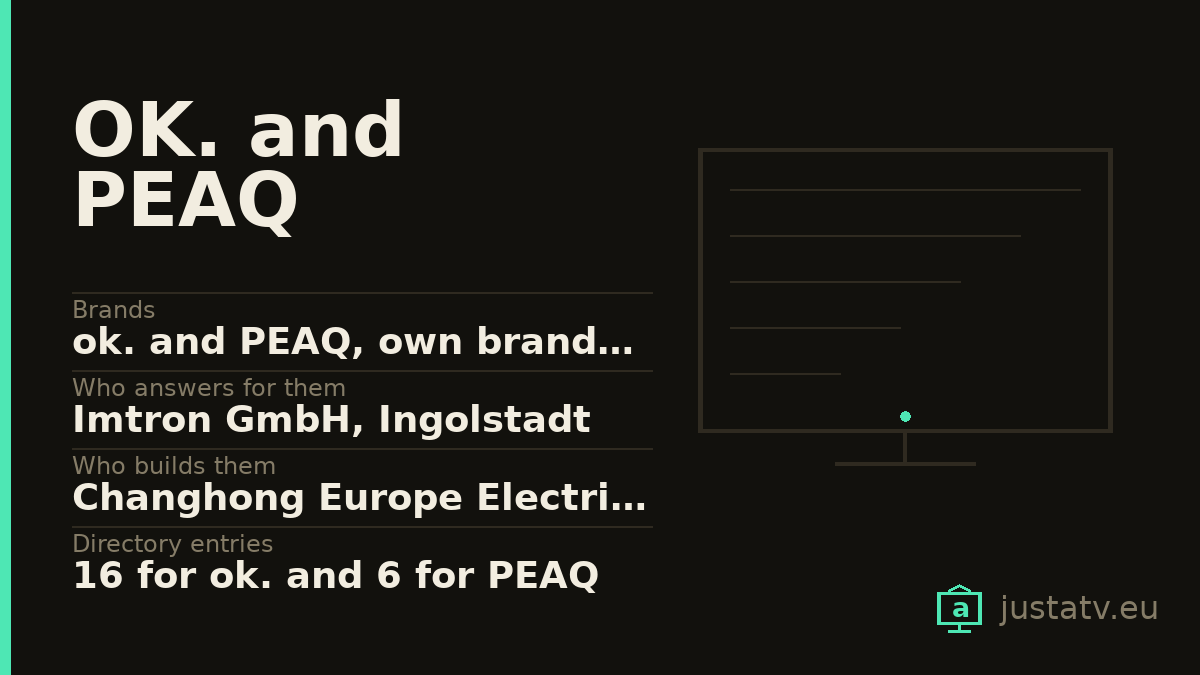
A single company signs all 306 EPREL records held by the two brands. And since 1 January 2026 Grundig has been licensed to Changhong: the group's own report says so, in a footnote.
· 8 min read · By television
Europe's biggest television group does not put its name on the shop floor. Of 1,518 EPREL entries downloaded, 1,195 are signed by six companies in that one group.
· 8 min read · By television
Three Japanese and Korean names with decades of history, today licences: 50 directory entries and not one platform of their own between them.
· 7 min read · By television
209 boxes, 109 brands, 168 platforms. Nine brands on four continents hand out the same device with their own name on it, and none of them says who built it.
· 8 min read · By television
On a TV the question is what you can remove. On an operator's box the question comes earlier: is it yours? All three contracts say no.
· 7 min read · Not Android
Seventy pages on this site say support runs out after three years. This is the one that says the opposite, and it says it with dates too.
· 7 min read · By television
Six platforms in the directory, and Skyworth and Mecool are on all six. If the box is the same, what decides the purchase is memory, price and who answers.
· 8 min read · By television
Eight operators across Germany, Austria and Switzerland hand out Android TV boxes. The question is not what comes off: it is whose it is. Each contract answers differently.
· 9 min read · Not Android
A thirty-euro stick is not one device: it is thirteen, with memory from 1 GB to 4 GB. With the figure in front of you, some fix the TV and some repeat it.
· 7 min read · By television
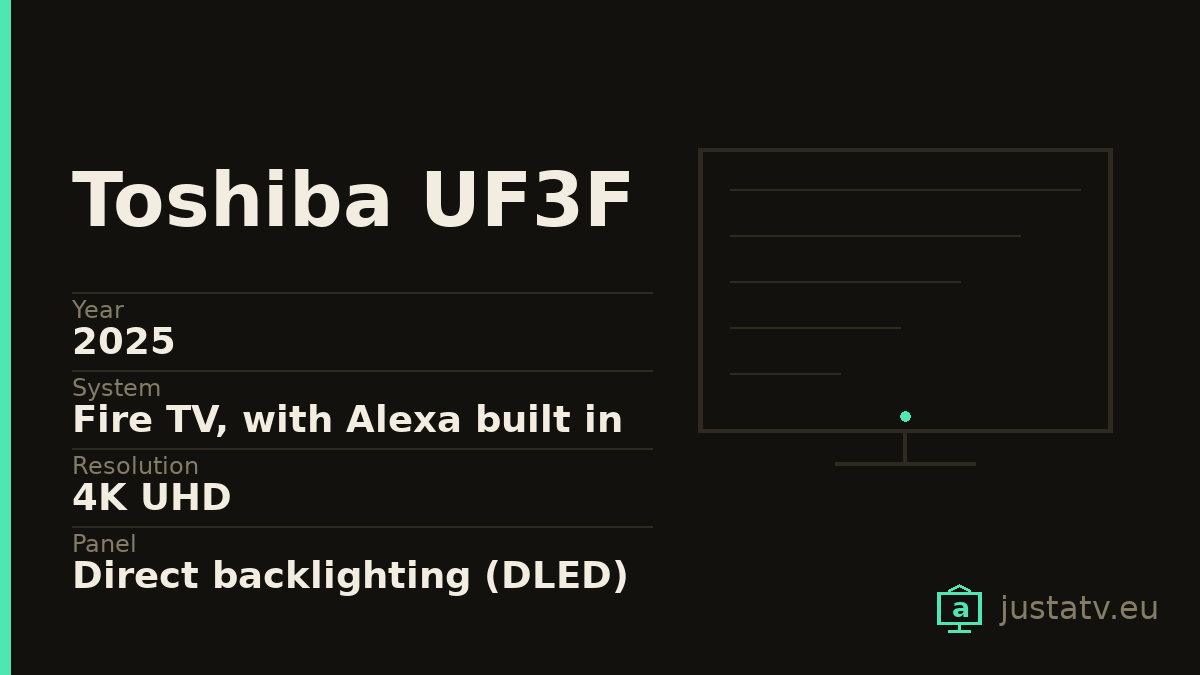
Toshiba's top range in Spain is two series running two different systems. And a television sold as OLED whose own spec sheet declares a DLED panel.
· 8 min read · By television
All three sell by the truckload in Spain and almost nobody looks inside them. Download their catalogues and four operating systems turn up, none of them the one their own sites still advertise.
· 7 min read · By television
The bottom of Sony's catalogue, the part that sells most and that nobody writes about. With an awkward detail: the 2026 model ships with less than the 2023 one.
· 8 min read · By television
The first European Sharp with local dimming, and a sister range where the eARC is no longer on the port the brand's other models left it on.
· 8 min read · By television
The best-selling QLED, with both fiches side by side: what it really adds over a Crystal UHD, and where the newer set goes backwards.
· 8 min read · By television
The floor of Samsung's catalogue: three HDMI ports, 20 W of sound, no brightness figure at all, and a system with no ADB and nothing to uninstall.
· 8 min read · By television
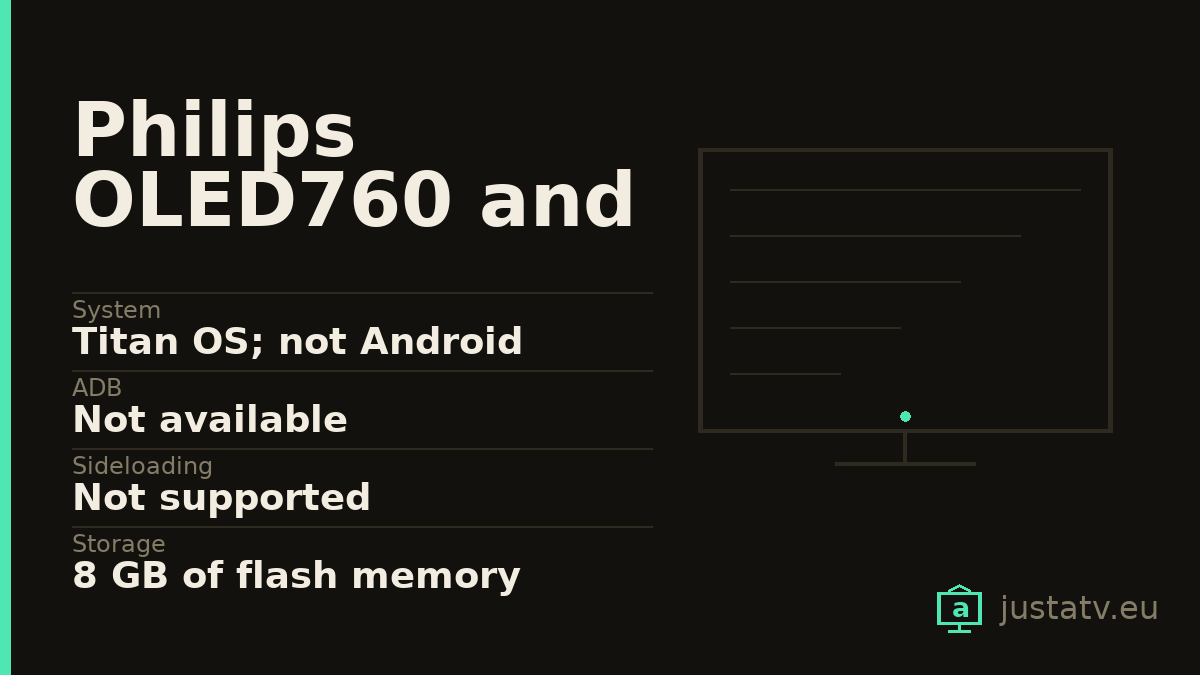
An OLED with Ambilight and a closed system. These are the only two Philips OLEDs that do not run Google TV, and between the two there is not one declared difference.
· 8 min read · Not Android
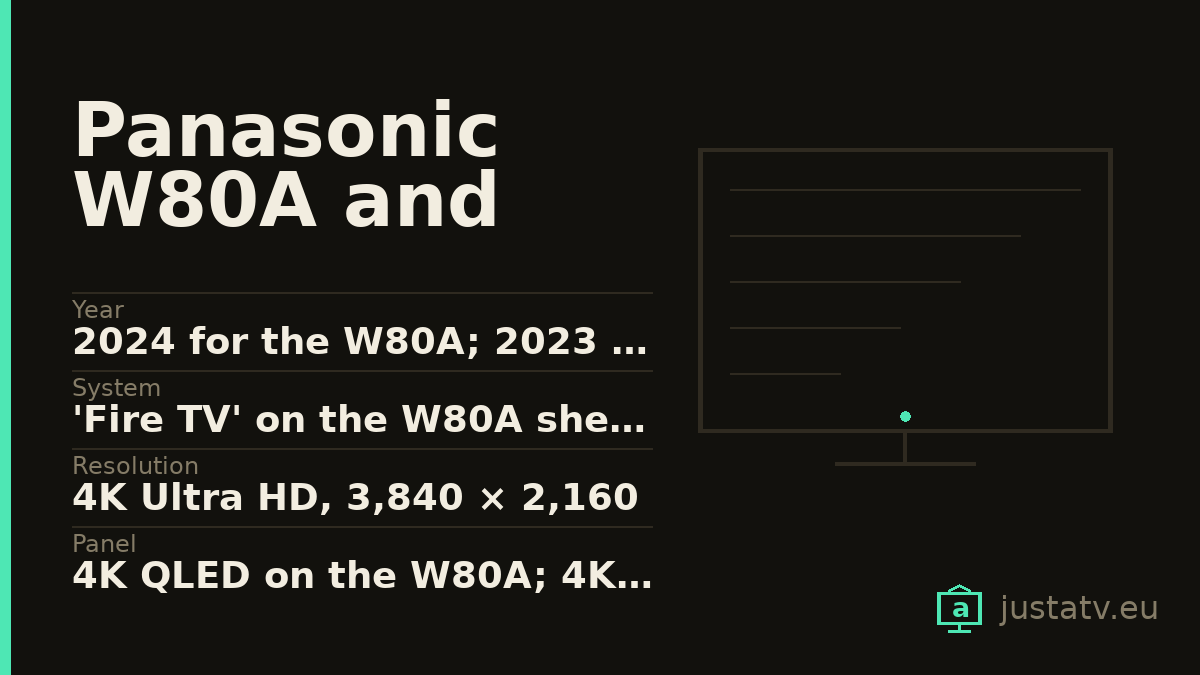
The affordable Panasonics that also switch on into Amazon's store. The system comes down intact from the Z95A; the port split does not. Worth knowing before you plug anything in.
· 8 min read · By television
A shop brand has no factory. What you buy is somebody else's set with the shop's badge on it, and the directory proves it without taking anyone's word.
· 8 min read · By television
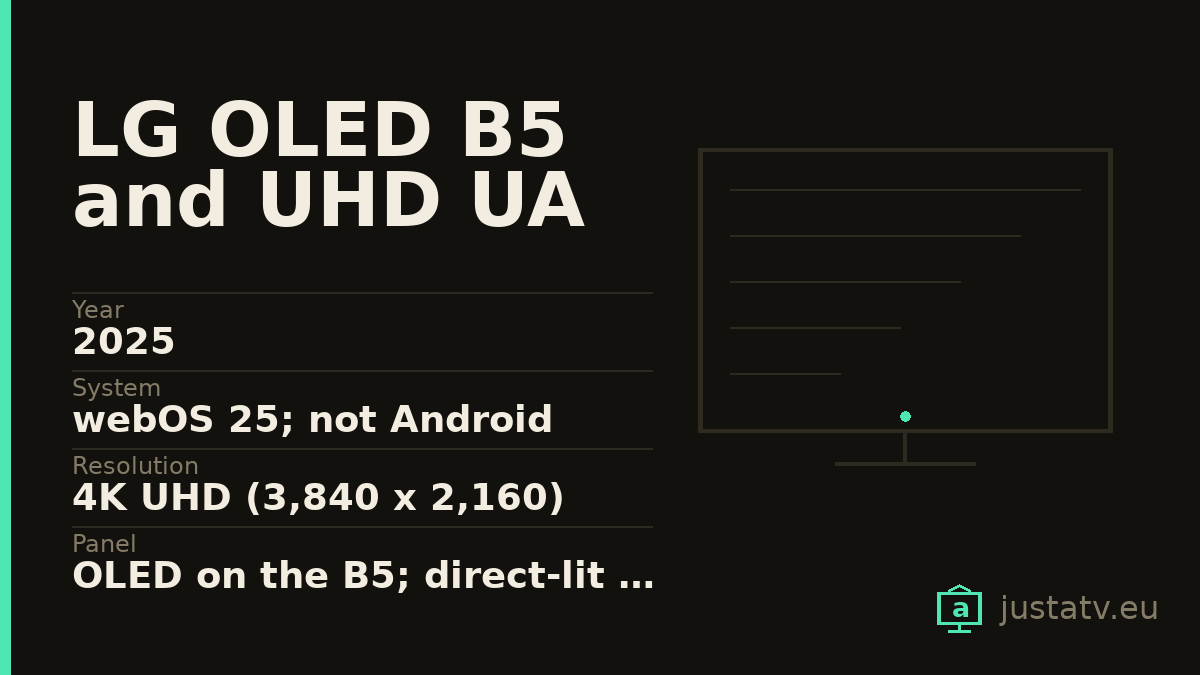
LG's affordable end on webOS 25. No ADB here either. And the old question (B5 or C5) finally answered with both LG tables side by side.
· 8 min read · By television
A Ukrainian brand built in Shenzhen and registered in Budapest, and a French one owned by Skyworth since 2015. Neither sells anything at kivi.tv or strong.tv.
· 7 min read · By television
Three names with ninety years of history and not one platform of their own. Sanyo's fit inside Hitachi's, and Hitachi's fit inside Schneider's.
· 7 min read · By television
Seven trade names on one platform, three platforms it shares with nobody, and a manufacturer with an address. Haier is the mirror image of JVC.
· 7 min read · By television
On a TV the question is what you can remove. On a player it is a different one: whether it is worth buying. Two figures answer it, memory and years of support.
· 7 min read · By television
Three of France's best-selling televisions carry the name of the shop that sells them. None of the three has a single platform of its own, and one is not even owned by the chain everybody assumes.
· 7 min read · By television
The chiq.eu domain is for sale, the warranty is signed by a Czech company, and Google's directory gives CHiQ two platforms it shares with nobody. The brand mentions none of the three.
· 8 min read · By television
Eighty-one Thomson models and five Nokia ones with Google TV, all sharing the same blank box in the European register: the guaranteed years of updates.
· 8 min read · By television
Samsung's 2025 mid-range: three HDMI ports instead of four, 60 Hz instead of 165, and a system with no ADB and nothing to uninstall.
· 7 min read · By television
Philips' best-selling range is not Android. No ADB, no packages to disable, and inside the PUS range itself there is one series that does run Google TV.
· 8 min read · Not Android
LG's mid-range on webOS 25. No ADB here either, but there is a trap: the same series holds two televisions with nothing in common.
· 7 min read · By television
439 TV brands, 222 platforms and 401 brands without one of their own. Comparing a JVC with a Blaupunkt can mean comparing the same set twice.
· 9 min read · By television
One belongs to Beko and sells no televisions at all on its German site. The other builds nothing: it licenses the name. Neither publishes the memory.
· 8 min read · By television
A Neo QLED and an OLED from 2025 with four HDMI ports that all run fast, no Dolby Vision, and a system with no ADB and nothing to uninstall.
· 7 min read · By television
Panasonic's flagship OLED and its Full Array LED sibling. Same processor, the same four HDR formats, the same port split and the same Amazon store on switch-on.
· 8 min read · By television
Two 2025 OLEDs running webOS 25. No ADB, no package list: what does come off is Live Plus. And their four HDMI really are four fast ports.
· 8 min read · By television
The U8Q is the higher model and declares one HDMI fewer than the U7Q PRO. And at 75 inches the cheap one gets a VA panel and the dear one, ADS.
· 8 min read · By television
A 55-inch canvas television and a 116-inch machine. Both are bought for what they physically are, and both ship with the most locked-down platform around.
· 8 min read · By television
Mini LED with real dimming zones, a promo block promising a Wi-Fi the table contradicts, and three of the maker's own spec sheets published blank.
· 8 min read · By television
In a range where everything else is 4K with Google TV, this one stops at Full HD and the older interface. And TCL never says so: you have to deduce it.
· 8 min read · By television
Sony's two Mini LED sets for 2024, with the same software and the same back-to-front port layout. And a microphone switch that is not in the same place on both.
· 8 min read · By television
The most expensive sets in the Hisense catalogue, and the most locked down. With one oddity in the sheet: the UR8 claims more zones than the UR9 where they overlap.
· 8 min read · By television
Two Mini LED sets that look like twins in the shop and are not in the table: the U7E declares about half again the peak brightness at every size.
· 7 min read · By television
Twenty-four models without a single line about how much memory they carry, and five of the maker's own pages that contradict themselves on the one spec that matters.
· 8 min read · By television
Four ranges that look like the same television in different sizes. Between the A5 and the A6 the size is not what changes: the kind of set does.
· 7 min read · By television
The 55, 65 and 75-inch sets run at 60 Hz with 2 GB of RAM and Wi-Fi 5. The 85 and 98 run at 144 Hz with 3 GB and Wi-Fi 6. One name, two televisions.
· 8 min read · By television
Xiaomi's 2026 sets do not run Google TV, they run Fire TV. And between the F and the F Pro the processor and memory do not change: the brightness does.
· 8 min read · By television
Within one range, the inch count usually changes only the size. Not here: the 32-inch A Pro has another resolution, another memory, other HDMI and another system.
· 8 min read · By television
Up to 16,848 colour zones and a claimed 9,000 nits. And a renamed spec field that is worth understanding before you buy.
· 8 min read · By television
Sharp sells four different operating systems and only the model letter tells them apart. Two of them take no ADB at all. Worth knowing before you pay.
· 8 min read · Not Android
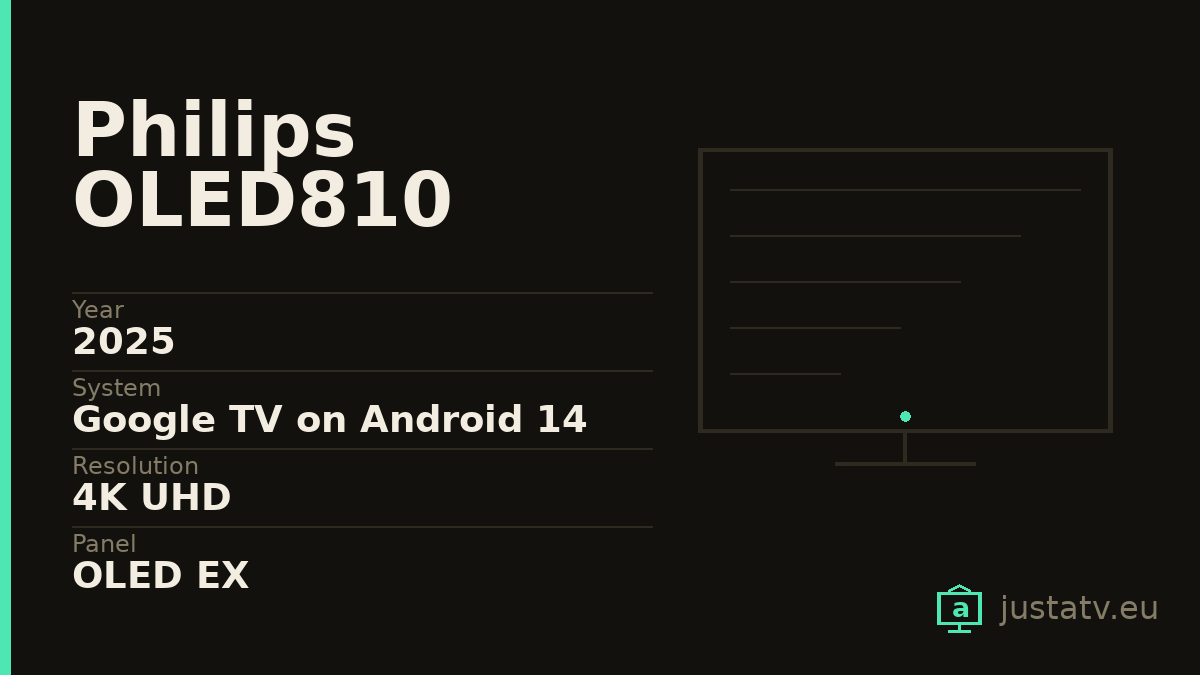
Two OLEDs with Google TV on Android 14 and three-sided Ambilight. And a warning first: below the OLED810 the system is Titan OS and none of this applies.
· 8 min read · By television
408 zones, 1,700 nits of peak brightness and 144 Hz for 3 GB of RAM. And three HDMI ports in total, of which eARC takes one of the two fast ones.
· 8 min read · By television
Same panel cell, same processor, same wi-fi chip, same speakers. One letter apart in the name, and two different operating systems.
· 8 min read · By television
An entry-level Fire TV whose spec sheet claims a brightness of 250, 275 or 300 without saying of what. And three HDMI ports, with eARC taking one of them.
· 8 min read · By television
Three series that look like the same range. One has native 144 Hz, another never reaches Dolby Vision, and between the first and the last lies a gulf of colour.
· 8 min read · By television
Up to 20,736 zones and 10,000 claimed nits. And two of TCL's own pages whose headline announces a brightness its spec sheet does not agree with.
· 8 min read · By television
A Mini LED with 3,000 nits and 2,176 zones whose own maker does not publish how many HDMI ports it has, how much memory it carries, or how many watts it sounds.
· 8 min read · By television
Sony's QD-OLED for 2025, with the sound coming out of the panel itself. And a spec sheet that declares Android 12 on one side of the Atlantic and nothing on the other.
· 8 min read · By television
Sharp is one of the few makers that publishes on its official sheet which apps come installed. Here is that list, and what to do with it.
· 8 min read · By television
Two OLEDs with four-sided Ambilight and Google TV on Android 14. Four HDMI ports, of which only two run, and the eARC takes one of those two.
· 8 min read · By television
Metz publishes brightness inch by inch, which is rare. But its 144 Hz only appear in the marketing copy, never in the specification table.
· 7 min read · By television
Amazon publishes the RAM, the processor and the Android version of its televisions. No other manufacturer does. And what you read there is revealing.
· 8 min read · By television
An OLED whose sound comes out of the screen itself, with Google TV on top. And four HDMI ports of which Sony itself makes clear that only two are quick.
· 7 min read · By television
Two names for the same television, with 144 Hz that are genuinely real and four ports labelled HDMI 2.1 of which only two actually run.
· 7 min read · By television
The same product page says "Android TV 11" in one paragraph and "Google TV" in another. When the maker cannot make up its mind, all that is left is to ask the machine.
· 6 min read · By television
Two Fire TV sets that share everything but the panel. And one figure their maker publishes on no spec sheet at all: how much memory they carry inside.
· 6 min read · By television
An entry-level QLED with Google TV, a 60 Hz panel and a «120 Hz game accelerator» that only works at 1080p. Worth knowing before you plug the console in.
· 7 min read · By television
An entry-level 4K set with Google TV, 2 GB of memory and 16 GB of space. And official spec sheets that contradict each other depending on where you read them.
· 7 min read · By television
The company that put these brands on European televisions went under in April 2026. There will be no more updates. Here, clearing out stops being an option and becomes the way.
· 7 min read · By television
One name for five very different televisions, all of them with 8 GB of storage. Cleaning up here is not a matter of taste: it is what keeps the machine alive.
· 7 min read · By television
Over four thousand measured nits, 1,680 zones and Bang & Olufsen sound. And on top of that, an Android 12 that was not new in 2025, in a set built for ten years.
· 6 min read · By television
Sony's Mini LED for 2025, with Google TV on top of Android 12. It ships with fewer additions than its rivals, and half the home screen still is not yours.
· 6 min read · By television
An OLED with Google TV on Android 14 and Ambilight. And a trap: the model next to it in the same range does not run Google TV, so the list is not the same.
· 6 min read · By television
A Mini LED tuned with Panasonic's rigour, all four HDR formats and 1,380 measured nits. And on top of it, Amazon's store as the home screen.
· 8 min read · By television
Here the store does not sit on top of the television: it is the one that makes it. That changes what can come off, and what comes back with every update.
· 7 min read · By television
On an LG running webOS the function that watches what you watch is called Live Plus, it arrives switched on, and it takes four clicks to turn off. The rest has less room.
· 7 min read · Not Android
On a Samsung running Tizen there are no commands. There is one checkbox buried inside Terms and Conditions that decides whether the set watches what you watch, HDMI included.
· 7 min read · Not Android
On a Hisense running VIDAA no command will help you. What will are four settings almost nobody touches, and they take out most of the problem.
· 8 min read · Not Android
An Amazon Fire TV with Xiaomi's name on the front. No Play Store and no Google packages here: the home screen belongs to Amazon, and that changes the whole list.
· 6 min read · By television
A thousand zones, 1,500 nits and 64 GB of storage: on this set you are not clearing out for room, you are clearing out because the home screen is not yours.
· 6 min read · By television
An entry-level QLED with Google TV and only 8 GB of storage, where removing apps is not cosmetic: it decides whether the set can still update itself.
· 6 min read · By television
A mid-range Mini LED set with Google TV, a 144 Hz panel and a home screen that shows you more than you asked for.
· 7 min read · By television
The cleanest Google TV on the market still ships with things you did not ask for, and here there is something else to watch: the features that only appear with a PlayStation in front.
· 6 min read · By television
A mid-range 4K set with Google TV, a decent panel for the money, and a home screen full of things you did not ask for.
· 6 min read · By television
There is a microphone in the remote and sometimes in the set as well. Worth knowing which is which.
· 2 min read · Privacy and telemetry
Before deleting something called com.manufacturer.dtvsvc it is worth finding out what it does. You can.
· 2 min read · Troubleshooting
If your television is a Samsung or an LG, the short answer is that there is nothing here for you. The long one explains why.
· 2 min read · By manufacturer
Not carelessness or poor quality. It is the business model, and understanding it explains everything else.
· 3 min read · Privacy and telemetry
Seven years without a patch and connected to your Wi-Fi. Not alarmism, just arithmetic.
· 2 min read · Privacy and telemetry
Before touching anything, it is worth understanding what ADB actually is, who put it there, and why using it is entirely ordinary.
· 3 min read · Getting started
An ugly word that turns out to be the soundest legal footing we have.
· 2 min read · Legal and warranty
Not paranoia: it is written in the manufacturers' own policies. Whether anyone reads them is another matter.
· 2 min read · Privacy and telemetry
The feature that knows what you are watching even when it comes from a laptop on a cable.
· 2 min read · Privacy and telemetry
The most complete answer of all: the panel is still good, so let it be only that.
· 2 min read · Apps and alternatives
One command, and the explanation of why it breaks nothing permanently.
· 3 min read · Getting started
A classic on older televisions, and it is not always the router's fault.
· 2 min read · Troubleshooting
The 8 GB on the box becomes 4 real and 400 MB free. Here is what to do.
· 2 min read · Troubleshooting
A new directive, in force for weeks. What it actually covers and what it does not.
· 2 min read · Legal and warranty
Where to start when there is no entry for your model: what is almost always safe, and what never is.
· 3 min read · Getting started
The whole process gathered in one place, in the order it has to happen.
· 2 min read · Getting started
The TV menu shows you part of it. The real list is considerably longer, and that is where the interesting things are.
· 2 min read · Getting started
A television that no longer works as a television can work perfectly well as an information panel.
· 2 min read · Apps and alternatives
The way back in one command, and the fallback for when that command is not enough.
· 2 min read · Troubleshooting
Paying for a television and finding adverts on your own home screen. It can be fixed.
· 2 min read · Privacy and telemetry
Almost always a dependency that did not look like one. It is fixable.
· 2 min read · Troubleshooting
The worst-case scenario, which still has a fix because the firmware was never touched.
· 2 min read · Troubleshooting
The panel has not failed. What has failed is what runs on top of it, and that can be fixed.
· 2 min read · Troubleshooting
Not all video apps weigh the same. On 1 GB of RAM, the difference is enormous.
· 2 min read · Apps and alternatives
The short answer is yes. The long one explains what it rests on and where the line is.
· 3 min read · Legal and warranty
You do not need Android Studio or a two-gigabyte download. It is a few megabytes and it works on all three systems.
· 2 min read · Getting started
The marketing name is no use for searching. The code on the sticker round the back is.
· 2 min read · Getting started
The most uncomfortable scenario, and why it almost always has a fix without touching anything physically.
· 2 min read · Troubleshooting
It is hidden behind seven taps in a menu. Here is the exact path, and what to do when your model does not show it.
· 3 min read · Getting started
The safety net under everything we do here. Worth knowing how to use before you need it.
· 2 min read · Troubleshooting
Off does not mean off. A smart TV in standby is still working, and that gets paid for.
· 2 min read · Privacy and telemetry
Neither a miracle nor a waste of time. Here is what to expect from the hardware you have.
· 2 min read · Getting started
The Android version decides which commands work. Here are two ways to find it.
· 2 min read · Getting started
The answer is not a yes or a no. It depends on what breaks and on who has to prove what.
· 2 min read · Legal and warranty
You can run an Android TV without signing in. Whether it is worth it is another question.
· 2 min read · Privacy and telemetry
Seven taps that do nothing. Here are the reasons and the alternative routes.
· 2 min read · Troubleshooting
No cables and two commands. Plus the three things that usually go wrong and how to fix them.
· 3 min read · Getting started
Seven mistakes that keep repeating, costing between ten minutes and an afternoon.
· 2 min read · Troubleshooting
Fire OS is modified Android. That means ADB works, and that you have to be more careful.
· 2 min read · By manufacturer
Mi TVs carry the PatchWall layer on top of Android TV. That is where nearly everything people want gone lives.
· 2 min read · By manufacturer
Behind half a dozen brands sit three manufacturers. Knowing which one you got solves half the problem.
· 2 min read · By manufacturer
TCL was among the first to bet on Android TV at the budget end. That means a lot of live sets and a lot of abandoned software.
· 2 min read · By manufacturer
Sony was early to Android TV at the premium end. Their Bravias age well on panel and less well on software.
· 2 min read · By manufacturer
Two manufacturers who move between Android and their own systems. First job: work out what you have.
· 2 min read · By manufacturer
Philips televisions are built by TP Vision, and it shows in the package names.
· 2 min read · By manufacturer
Two familiar brands, one manufacturer behind them, and software rather cleaner than usual.
· 2 min read · By manufacturer
Hisense mixes Android TV with its own VIDAA layer depending on the model. The first job is working out which you have.
· 2 min read · By manufacturer
Works on any television, Android or not, and requires touching the set at all.
· 2 min read · Privacy and telemetry
The change you notice most on an older television, and the exact order that keeps you out of the dark.
· 2 min read · Apps and alternatives
Eight possible causes, ordered by likelihood. The first solves half of them.
· 2 min read · Troubleshooting